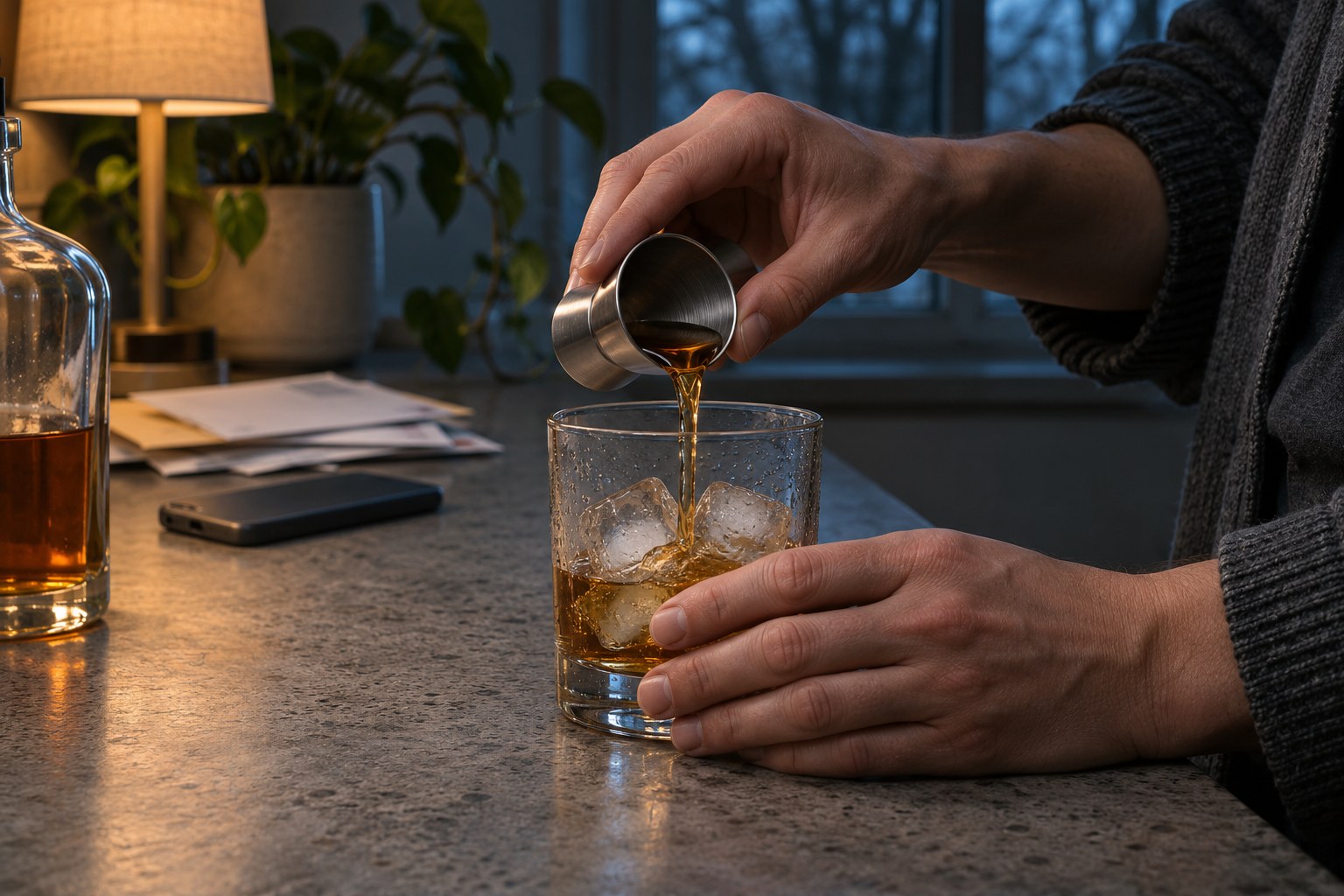
Some evenings, you can name every problem in the room and do very little about any of them. A conversation ended badly. A bill is due. Someone has gone quiet and you have no idea what it means. Then you open the cupboard and take down the glass you always use. You hear the ice hit the bottom. You measure the pour. The glass gets cold in your hand. For those few seconds, you decide what happens next.
Here’s what makes me curious. Suppose some of the relief arrives before the first sip. What did you get from those few seconds? Maybe you liked the sound of the ice or the smell of the drink. Maybe you were looking forward to its effect. Maybe you had spent the day responding to things other people decided, and here was a small sequence that belonged to you.
What I mean by self-will
When I use self-will here, I mean the felt ability to direct some part of your experience. Psychologists often call this agency. You can select the glass, choose the amount, and decide where to sit. You can also begin to feel calmer or more in charge. Choosing what happens and feeling more in charge are different experiences, even when they happen within seconds of each other.
Research on compensatory control suggests that when people feel less control over their circumstances, they often seek order or predictability elsewhere (Kay et al., 2009). A laboratory study found that alcohol dampened reactions to unpredictable stressors more than predictable ones, regardless of whether people could control the stressor (Bradford et al., 2022). That study examined alcohol’s effects after consumption. Whether mixing a drink offers a separate feeling of control before drinking is the question I’m proposing.
When preparation becomes part of the reward
The clink of ice, the scent of citrus, and the weight of the glass can all become associated with what follows. A large review found links between drug-related cues, craving, and later substance use or relapse (Vafaie & Kober, 2022). A familiar cue can stir anticipation even when the person experiences the routine as calming.
Psychologists call it negative reinforcement when a behavior becomes more likely because it eases something unpleasant. If pouring a drink regularly marks the first moment the day feels bearable, the person may begin looking forward to the pour itself. Pleasure, relief, withdrawal, and habit can also influence repetition. Which of these is doing the most work may change from one evening to the next (Koob & Volkow, 2016).
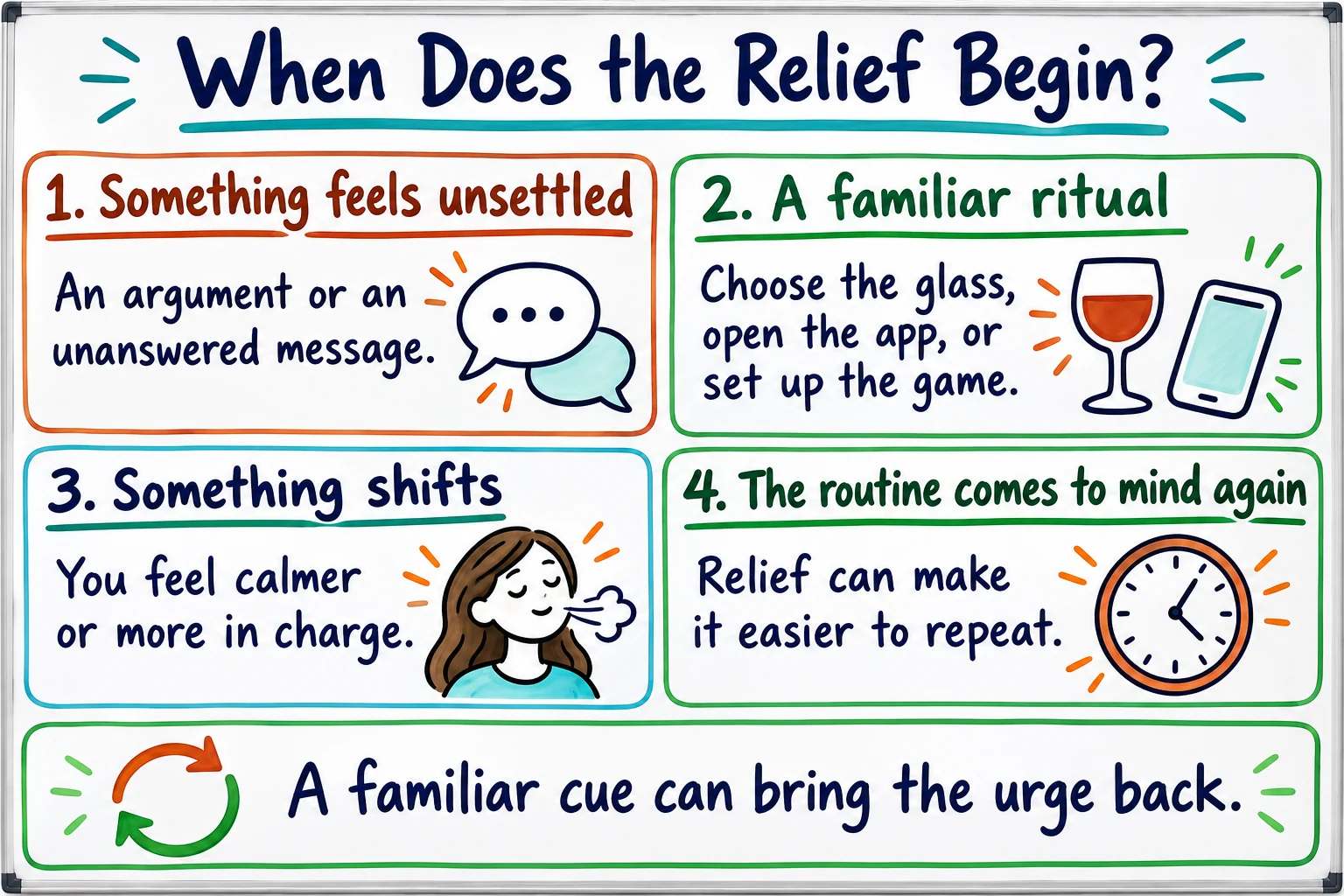
Read the whiteboard text
- Something feels unsettled An argument, an unanswered message, or a worry you can’t resolve.
- You arrange a familiar sequence Choose the glass, open the app, or set up the game.
- Something shifts You feel calmer, more in charge, or more eager to continue.
- You learn what to reach for If relief or reward follows, the routine may come to mind sooner next time.
A familiar cue can bring the urge back. Sometimes that cue is the hour of the day, the place you sit, or simply seeing the device.
How it can look in other habits
Nicotine and the familiar break
Think of someone who steps outside after an upsetting phone call. The door closes, the air feels different, and for a few minutes no one asks anything of them. Then they smoke or vape. What brings the first relief? It might be the privacy of the break, the familiar movement of the hand, or the anticipation of nicotine. Nicotine can also ease nicotine withdrawal. Everyday routines, such as coffee or a work break, can become triggers in their own right (National Cancer Institute, n.d.).
Pornography and a scene you can choose
A person can choose when to look, what to see, and when to move on. That can feel especially appealing after an evening of loneliness, rejection, or uncertainty. Research links motives such as stress reduction and emotional distraction with problematic pornography use (Bőthe et al., 2021). Whether arranging the experience restores a sense of control is a separate question. ICD-11 classifies compulsive sexual behaviour disorder as an impulse-control disorder. Persistent difficulty controlling the behavior and significant distress or impairment matter to that diagnosis (Kraus et al., 2018).
Gambling and gaming
A person who gambles might choose the numbers, pick a seat, or repeat a bet that once paid off. Those choices are real. In a game of chance, they can also foster the impression that the person has more influence over the outcome than they do (Clark, 2010). A video game can offer a different experience. You get a clear task, immediate feedback, and another attempt. That can be satisfying after a day when you couldn’t tell whether anything you did made a difference. Gambling and gaming disorders involve impaired control and significant consequences. Enjoying a game or being absorbed in it on a given evening tells us little by itself (World Health Organization, 2020, 2024).
Phones, iPads, and tablets
You pick up your phone to check for a reply. Before you know it, you’ve opened three other apps. Or you settle into bed with an iPad and put on the same kind of video you watched the night before. Your thumb knows where to go. You decide what to skip, what to replay, and how long to stay. A message, a new post, or the next clip is still unpredictable, even though reaching for it feels familiar.
Research links difficulty regulating emotions with problematic smartphone use, though the association leaves cause and effect open (Shahidin et al., 2022). A device can be a route to several activities, so it helps to name the one you keep coming back to (Panova & Carbonell, 2018). Checking messages might help you feel reassured. Scrolling might make an awkward silence easier to sit through. Watching the same videos might mark the end of the day. The same device can serve different purposes, and hours alone tell you little about which one matters.
What happens to choice over time?
Imagine someone who can still choose every ingredient and yet keeps pouring a second drink after deciding on one. Or someone who can choose any video they want and regularly stays up an hour longer than they intended. They still have choices inside the routine. The choice that seems to be getting harder is whether to start or when to stop. That is where I would pay attention to the effects on sleep, money, work, relationships, or health.
Try asking yourself. What felt outside my control just before I reached for this? When did my body or mood first shift? What did I get in that moment, and what did I give up later?
One evening, the answer might be, “I wanted a drink.” On another, it might be, “I wanted ten minutes in which I knew what would happen next.” If you can tell those evenings apart, you may have a better idea of what you were reaching for.